
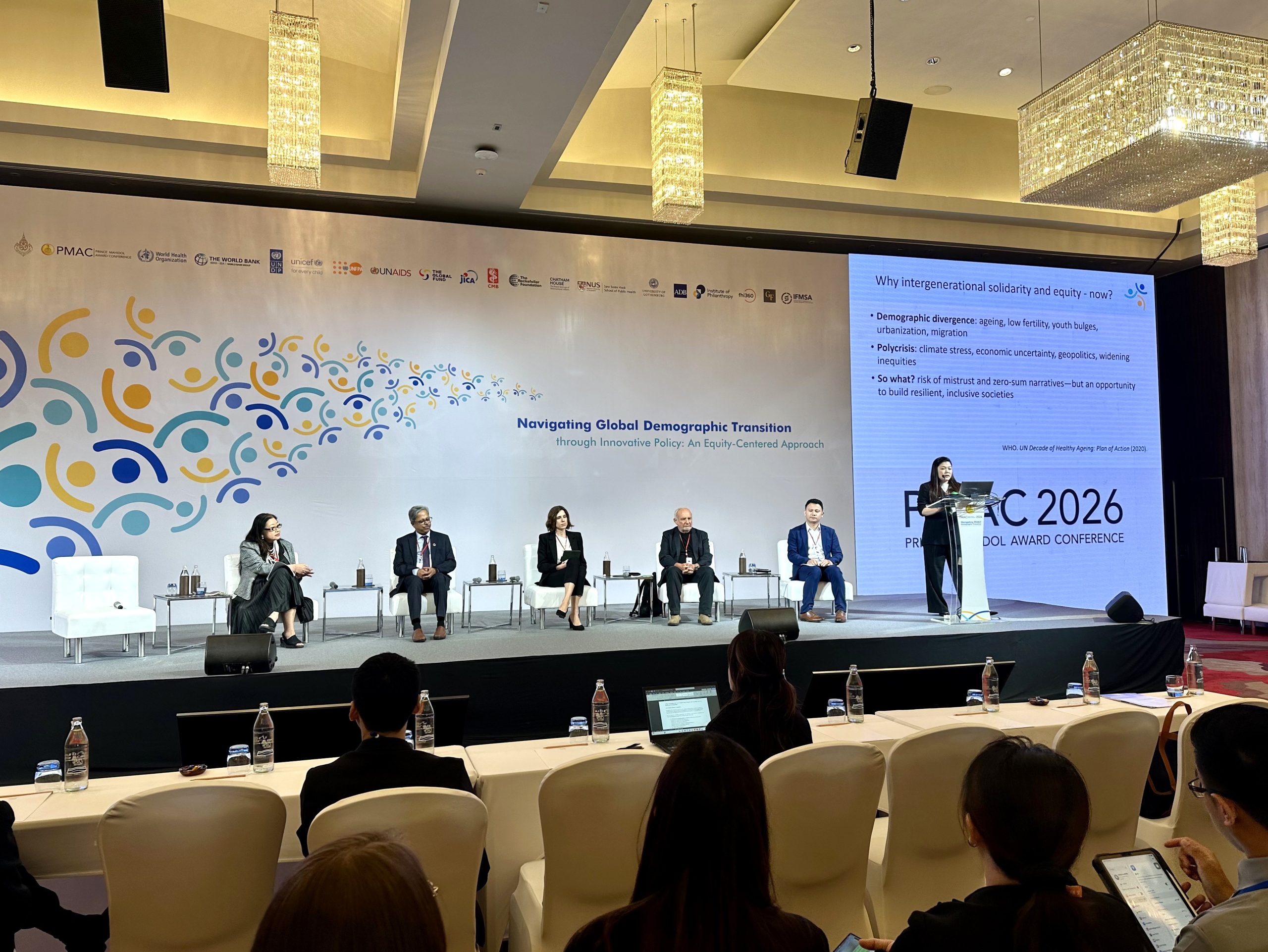
BANGKOK, THAILAND – In a world increasingly defined by rapid demographic shifts and a polarising “generational war” narrative, the question is no longer just how we age, but how we thrive together. As global populations face the dual reality of ageing societies and burgeoning youth populations, ACAI convened a multi-sectoral panel of experts at PMAC 2026 to dismantle age-based silos and propose a new path forward. By placing equity at the heart of the conversation, this session transformed the unsettling uncertainty of our changing world into a powerful call for intergenerational solidarity, proving that our collective resilience depends on a social contract that values every stage of life.
Moderated by the WHO Technical Lead Dr. Mikiko Kanda, the PMAC PS 1.4 session, titled Advancing Intergenerational Solidarity and Equity in an Unsettling World, featured a keynote address by the John Richards Chair and Director of Care Economy Research Institute (CERI) at La Trobe University Professor Irene Blackberry and insights from panelists Prof. Sabu Padmadas of University of Southampton, Expert in Healthy Ageing & Ageism Dr. Vânia de la Fuente-Núñez, Prof. Steve Tollman of Wits University, and the Founder of Padyarescue Go Bike Project Mr. Edren Llanillo. The discussion centered on the main theme of navigating global demographic transitions through an innovative, equity-centered approach.
Professor Irene Blackberry opened the session by highlighting the necessity of building global resilience through “care ecosystems”. She defined these ecosystems as dynamic, relational frameworks that integrate care actors, resources, and policy to support individuals across their entire life course. Professor Blackberry emphasised that in the face of climate change, economic pressures, and societal polarisation, fostering bidirectional flows of care between generations is essential. This sentiment was echoed by Prof. Sabu Padmadas, who presented evidence-informed policy pathways aimed at reconciling intergenerational needs. He pointed out critical data gaps that currently undermine evidence-based policymaking and called for institutions to move beyond age-based silos to build truly inclusive communities.
The panel also confronted deep-seated social narratives that often pit one generation against another. Dr. Vânia de la Fuente-Núñez urged for a direct confrontation of the “generational war” narrative frequently found in media, suggesting that decisions must instead be grounded in their long-term intergenerational impact. Practical examples of this solidarity in action were shared by Prof. Steve Tollman and Mr. Edren Llanillo. Prof. Tollman provided compelling evidence from rural South Africa, demonstrating how youth can be effectively employed to promote healthy aging and HIV management among older adults, thereby strengthening family cohesion and community health. Mr. Edren’s contributions further underscored the importance of localised, youth-engaged interventions. Collectively, the speakers issued a call to action: to prioritize equity in care access, invest in workforce development, and empower communities as central care partners to ensure no generation is left behind in the transitions ahead.
###