
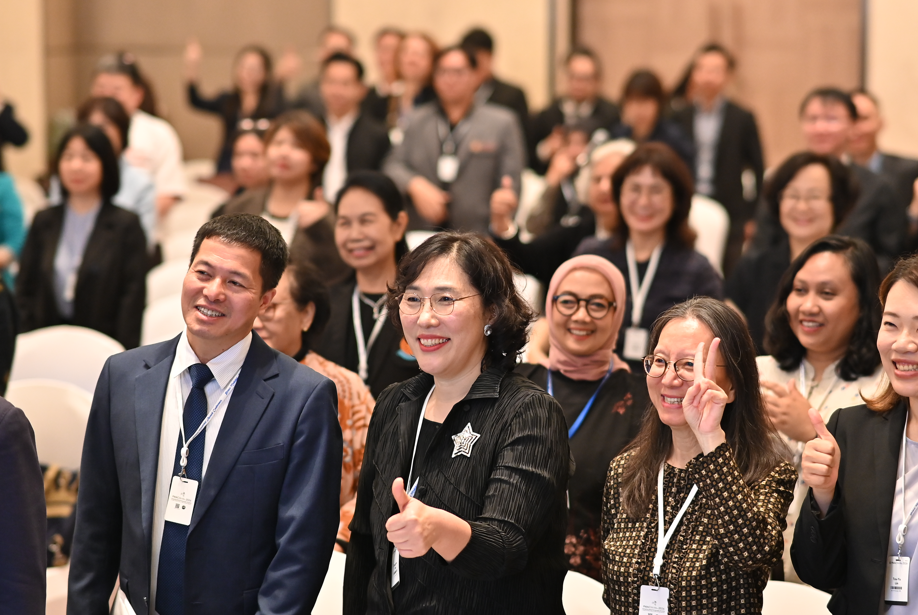
BANGKOK, THAILAND – In direct alignment with the Prince Mahidol Award Conference (PMAC) 2026 theme, “Navigating Global Demographic Transition through Innovative Policy: An Equity-Centered Approach,” ACAI has launched a high-level regional movement to transform the challenges of an ageing population into a catalyst for sustainable economic and social growth.
Recognising that the Asia-Pacific is home to a rapidly shifting demographic, ACAI spearheaded two landmark side events on 26 and 27 January 2026 at the PMAC 2026. These sessions were organised in partnership with the Health Intervention and Technology Assessment Program (HITAP), the Center for International Collaboration of Innovation and Safety for Ageing (CICISA), and the Active Aging Consortium in Asia Pacific (ACAP), supported by the Japan International Cooperation Agency (JICA), the Economic Research Institute for ASEAN and East Asia (ERIA), Japan-ASEAN Integration Fund (JAIF), and the Japan Center for International Exchange (JCIE).
The first day of the meeting, titled “The Appropriate Care Economy System and Beyond,” focused on developing a robust care system as a foundation for inclusive growth. This session emphasised that care work, encompassing both formal and informal labour, is a critical driver of social equity, economic resilience, and gender justice. Participants explored diverse interregional models and pilot initiatives, including community-based care services and long-term care innovations designed to enhance the dignity and wellbeing of older persons.
Key discussions throughout the day featured a mix of expert panel sessions and interactive dialogues. The first panel, moderated by Dr Irene Blackberry, examined lessons learned from the care economy with insights from Prof. Dr Takeo Ogawa and Dr Jadej Thammatacharee. Subsequent sessions addressed longitudinal ageing research in Thailand, pilot projects in Indonesia, and non-government initiatives in Japan. A specialised luncheon workshop led by Dr Donghee Han introduced narrative skills as a method for promoting cognitive function in the elderly. The day concluded with a deep dive into ASEAN-relevant active ageing policies, featuring reflections from regional experts based in the Philippines, Brunei, and Vietnam.
On the second day, the focus shifted to “Inter-regional, inter-sectoral and multi-stakeholders’ collaboration for Active Ageing & Innovation”. This event highlighted the necessity of collaborative solutions to ensure healthy and active ageing across diverse demographic stages, from pre-ageing societies like the Philippines to super-aged societies like Thailand and Singapore. The programme aimed to align regional efforts with the ASEAN Strategic Framework on Health Development 2021–2030 and the Kuala Lumpur Declaration on Active Ageing.
A significant highlight of the day was a ceremonial MOU signing between Fukuoka and Rayong, intended to foster knowledge and technical exchange. Panel discussions explored the different levels of demographic shifts across ASEAN Member States. Innovation was a central theme, with presentations on digital transformation in elder care. The event also featured sessions on industry-academia collaboration, public-private partnerships in Penang, and the role of international agencies in promoting active and healthy ageing. Closing remarks by Prof. Keizo Takemi underscored the importance of a unified roadmap for fostering regional commitments to active ageing.
###